Shape Everyday Ceramics
A practical introduction to making simple ceramic tableware by hand.
Work with clay through manageable bowls, cups, plates, and small dishes while learning how thickness, moisture, rims, joins, and drying affect each form.
From Clay To Tableware
Build useful habits around shaping, joining, refining, and preparing ceramic pieces for firing.
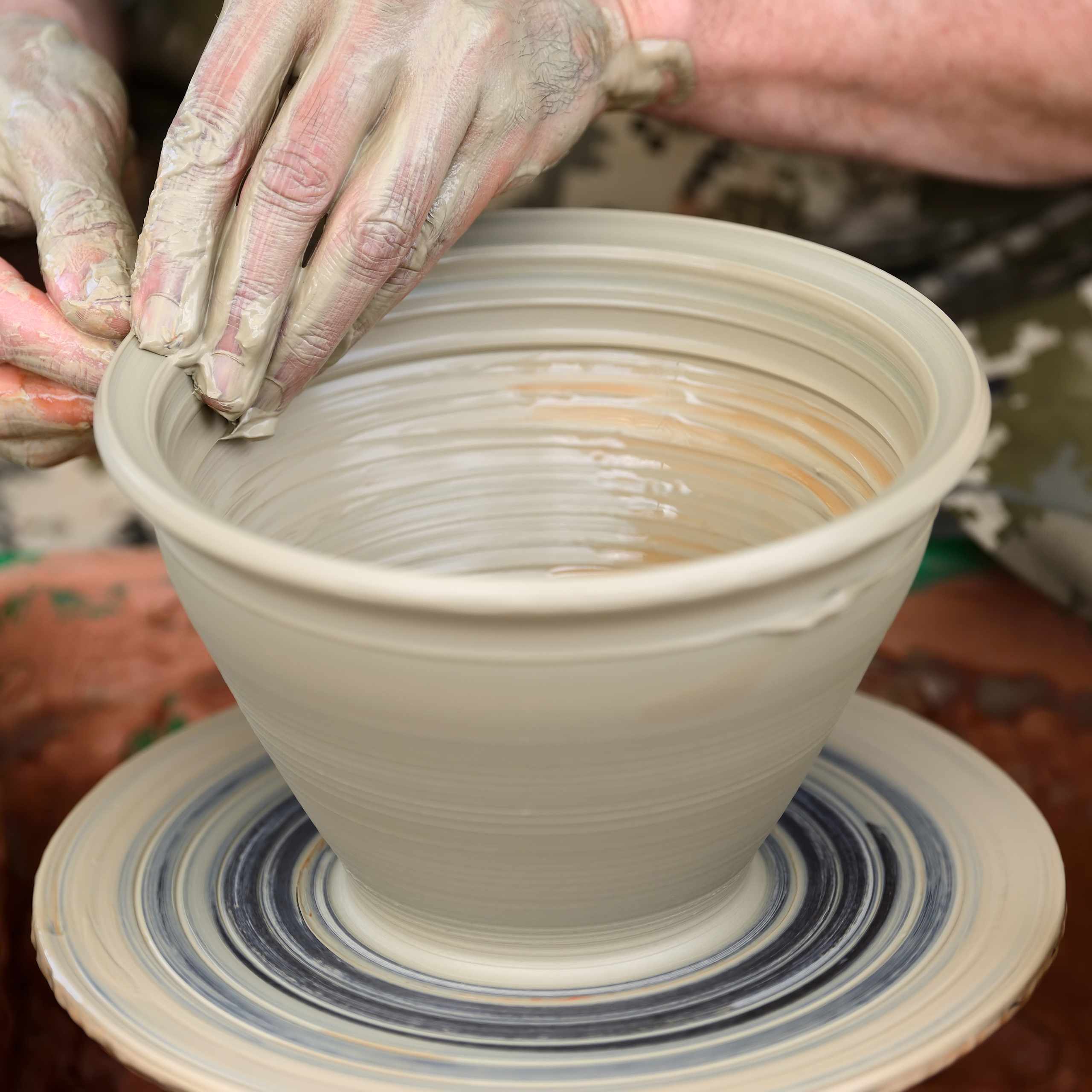
Prepare workable clay and notice how moisture changes the way a form responds to pressure.
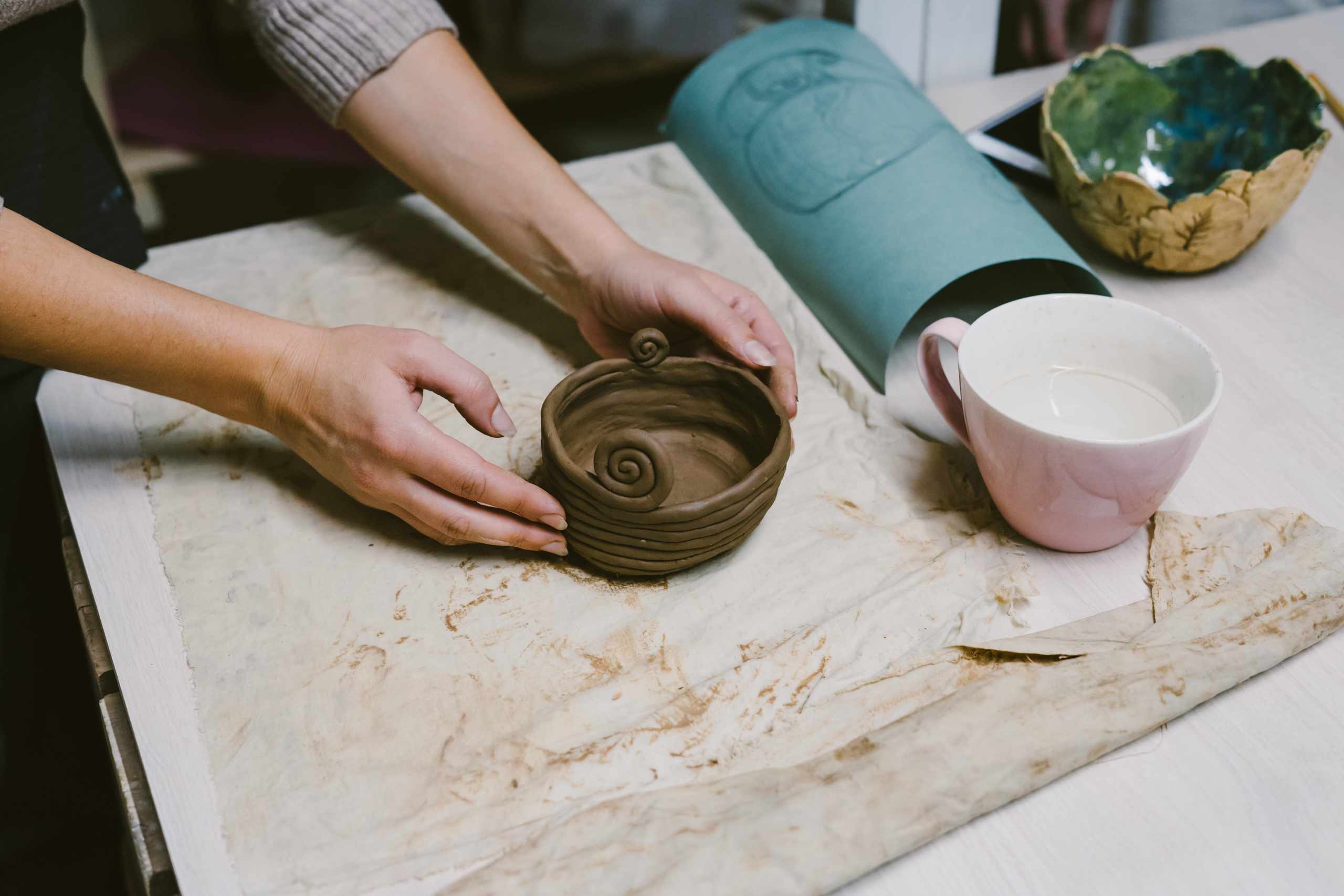
Use pinch, coil, and slab methods to build small dishes while keeping walls and edges under control.
Refine bases, rims, joins, and surfaces before drying, bisque firing, glazing, and final firing.
Practice The Parts That Matter
Simple forms make it easier to see what clay is doing and correct small problems before they become part of the finished piece.
Even Walls And Rims
Compare thickness by touch and refine edges so bowls and cups feel more balanced.
Stronger Clay Joins
Practice scoring, slip, and careful attachment to make handles and assembled forms more secure.
ClayDish keeps early projects focused on practical control rather than complicated shapes. Repeating a small bowl or plate gives you a chance to compare wall thickness, rim quality, base stability, moisture, and surface finish from one attempt to the next. The goal is to understand how clay behaves through shaping, drying, glazing, and firing so each new piece can be made with more deliberate decisions.
Control Clay Before Decorating
A stable base, an even rim, and consistent walls matter more at first than adding elaborate texture or decoration.
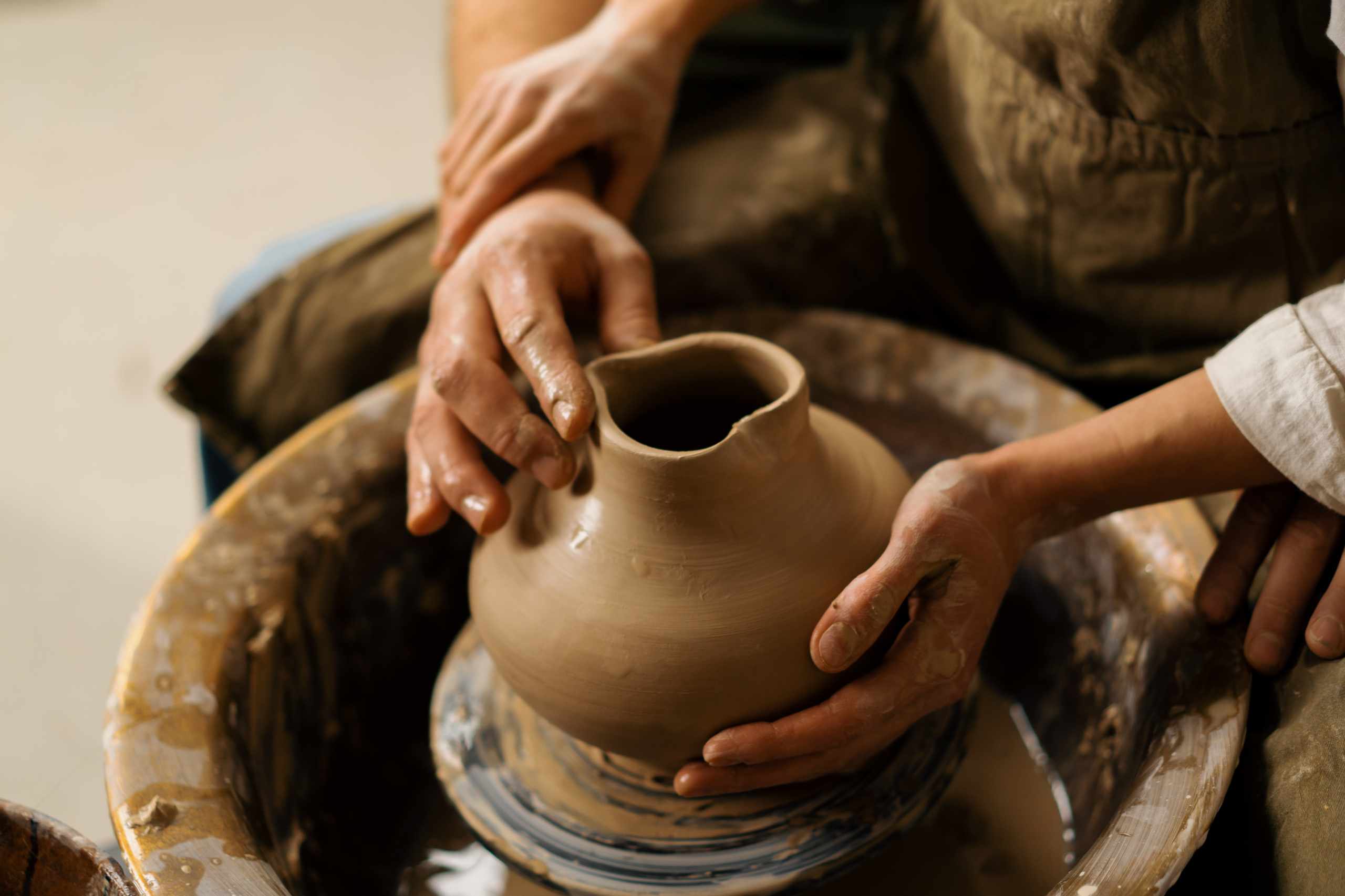
Pinch forms help you feel thickness directly as your fingers compress and shape the clay.
Feel The Wall Thickness
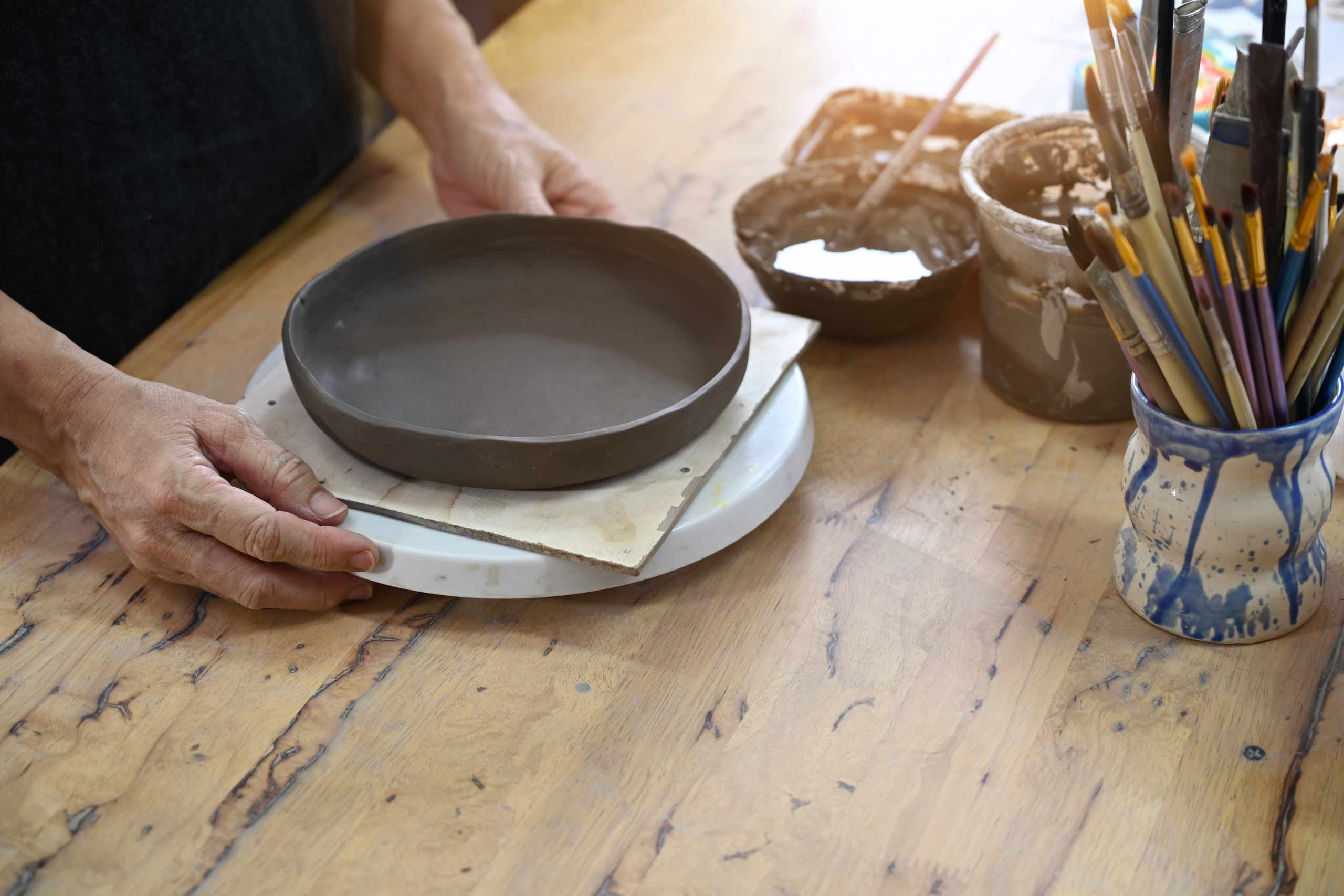
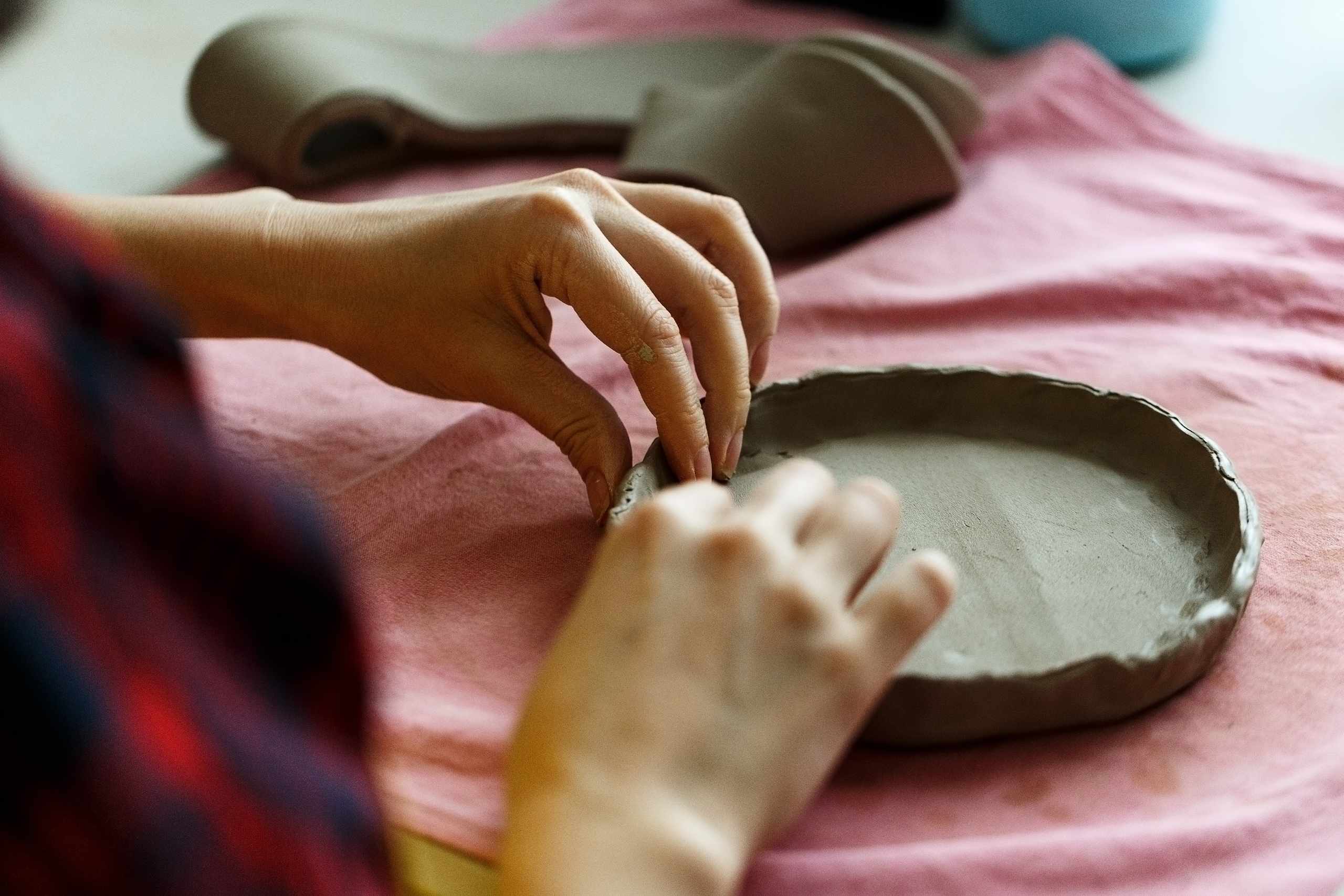
Slab forms make flatness, edges, and drying behavior easier to observe across a surface.
Watch For Warping
Build One Form, Then Compare
Making the same small dish more than once reveals differences in pressure, moisture, wall thickness, rim shape, and base stability. Those comparisons make it easier to understand which handling choices improved the form and which ones caused distortion.
Drying Is Part Of Making
A piece can look finished while still being vulnerable to cracking or warping. Learning when to stop handling it and how to let moisture leave more evenly is part of ceramic practice.
Prepare Surfaces For Glaze
Before glazing, inspect the surface, foot, edges, and bisqueware carefully. Thoughtful coverage and clean firing surfaces matter as much as choosing where glaze should appear.
Why The Process Comes First
The course approach gives attention to clay behavior, functional proportions, joins, drying, and finishing before adding unnecessary complexity.
Small Clay Problems, Explained
Read practical notes on uneven walls, moisture, scoring and slipping, warped slabs, handle attachment, glaze coverage, and other details that affect handmade tableware.